Pig Butchering Scams Exposed: Emotional Traps and Fake Investment Platforms
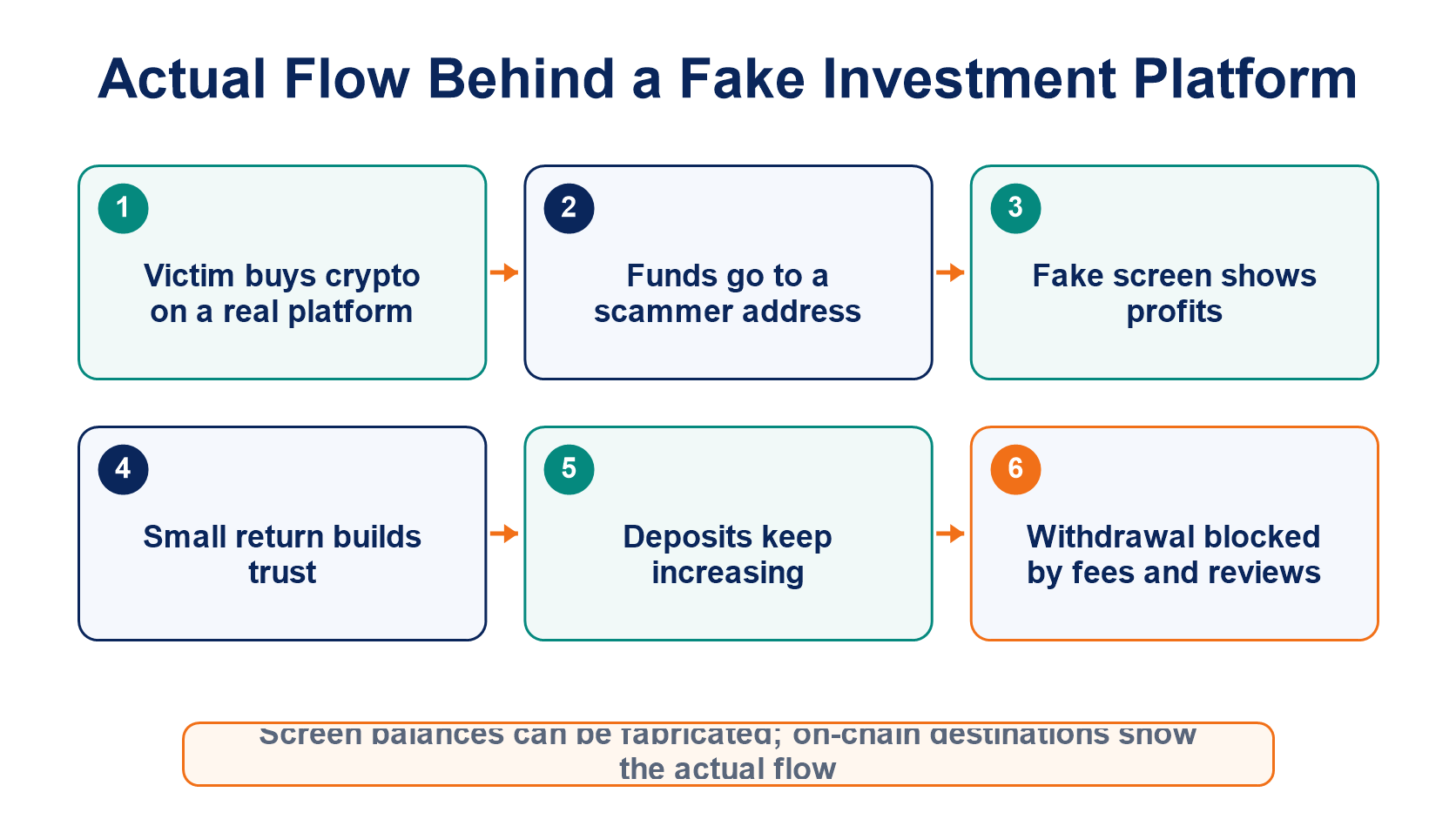
A pig butchering scam is a fraud in which criminals cultivate a relationship over time and then steer the victim toward a fake investment platform. The balance and returns shown on the platform are controlled by the scammers; in reality, the victim is usually just transferring funds to an address controlled by them.
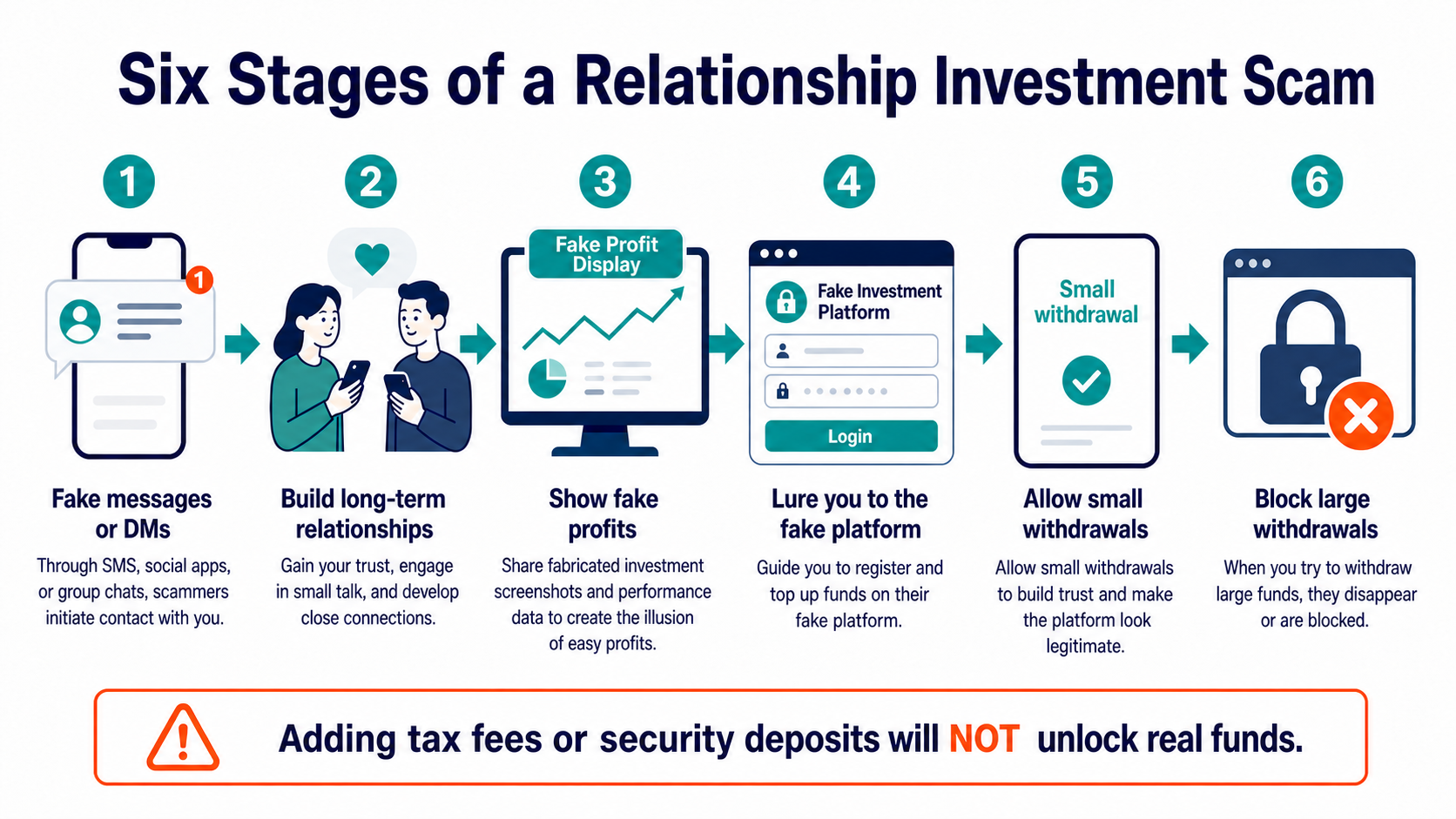
How Does the Scam Progress Step by Step?
Initial contact may come through a dating app, social media, or a message supposedly sent to the wrong number. The person does not immediately discuss money. Instead, they keep chatting, share details about their life and investments, and gradually build a romantic relationship, friendship, or mentor-like connection.
They later show profit screenshots or an affluent lifestyle and instruct the victim to buy cryptocurrency on a legitimate platform before transferring it to a designated website or app. The fake platform displays gains and may even allow one small withdrawal, making the process appear genuine.
Once the deposits grow, withdrawals are blocked by demands for "taxes," "security deposits," "credit score restoration," "anti-money laundering reviews," or "account upgrades." Every additional payment only increases the loss; it does not unlock any real funds.
How Do Fake Platforms Fabricate Account Balances?
The numbers on a website can be changed freely by its operators, while its trading charts may simply reuse public market data. The supposed customer support staff, mentors, and group members may all belong to the same criminal operation, with fabricated success stories used to create social proof.
To assess the situation, trace the actual flow of funds: identify the legitimate platform from which the funds were withdrawn, determine who controls the receiving on-chain address, and check whether the service has a verifiable operator and an independent withdrawal process. Do not rely on licenses, customer support statements, or block explorer screenshots supplied by the platform to validate the platform itself.
Which Combinations of Claims Are Major Warning Signs?
Stop immediately if the person demands secrecy, pressures you to borrow money, promises insider information, directs you to install an unofficial app, or asks you to trust the relationship instead of verifying the platform. The claim that "one final fee" is all that stands between you and a withdrawal is a classic tactic for extracting further payments.
Victims may already have invested both emotionally and financially. Ridiculing them can make them hide the situation and continue engaging with the scam. Family members can first ask them to stop all new transfers for 48 hours, then work together to verify the domain, transaction hashes, operating company, and official reporting channels.
What Should You Do After Discovering the Scam?
Stop arguing with the scammer and do not send any more money. Preserve the full chat history, website and app details, receiving addresses, transaction hashes, bank records, and exchange records. Contact the platform from which the assets were sent and the relevant local law enforcement agency immediately, explain that the transactions involve fraud, and provide a timeline.
If you shared your screen, installed remote access software, or disclosed account verification codes, change your passwords from a trusted device, revoke active sessions, and review your email account as well. Do not hire unsolicited "recovery experts" who contact you privately and demand an upfront cryptocurrency payment.
For information about other forms of fraud, return to the complete guide to cryptocurrency scams.
Frequently Asked Questions
Can It Still Be a Pig Butchering Scam If the Person Never Pursues Romance?
Yes. Friendship, business partnerships, mentorship, and shared interests can all be used to build trust over time. The defining feature is that the relationship is ultimately used to lead the victim into a fake investment.
Why Would a Fake Platform Let Me Make Money at First?
The displayed returns may exist only as numbers on a screen. A small withdrawal can also be permitted to lower your suspicion and encourage a much larger deposit.
Will Paying the Platform's Tax Unlock My Withdrawal?
A fraudulent platform has no genuine tax-payment or fund-release process. Any additional "tax" will usually be sent to another address controlled by the scammers.
What Can Family Members Do If the Victim Refuses to Report the Scam?
First preserve the evidence and prevent further transfers. You can notify the platform from which the funds were sent, then ask the relevant law enforcement or anti-fraud authority which materials it can accept.
Recommended
View more