The Complete Beginner's Guide to Cryptocurrency
Cryptocurrencies are digital assets whose ownership and transfers are recorded through cryptography, distributed ledgers, and network consensus. They may be used for peer-to-peer transfers, network fees, stable-value settlement, smart-contract applications, governance, or digital collectibles, but their functions, risks, and legal treatment differ.
One of the easiest mistakes for a beginner is to treat “cryptocurrency” as a single product and start trading based only on price movements. Bitcoin, Ethereum, stablecoins, exchange tokens, and small-cap tokens differ substantially in issuance, sources of value, technical risks, and regulatory treatment.
A sound learning order is to understand what the asset is, determine whether the relevant activity is permitted where you live, learn how platforms, wallets, networks, and security work, and only then decide whether to participate with money you can afford to lose.
This guide builds a complete framework around nine questions: what cryptocurrency is, how it differs from fiat money, how the industry developed, where value comes from, how assets are classified, whether crypto is legal, which terms matter, what its benefits and drawbacks are, and how to find reliable information.
What Is Cryptocurrency?
A cryptocurrency is generally a digital asset recorded on a blockchain or another distributed ledger. Network nodes follow common rules to validate transactions, update the ledger, and use cryptography to prove control over accounts or assets.
The balance shown in a wallet does not mean coins are physically stored on a phone. The blockchain records which addresses can control which assets, while the wallet helps users manage keys, generate addresses, and sign transactions.
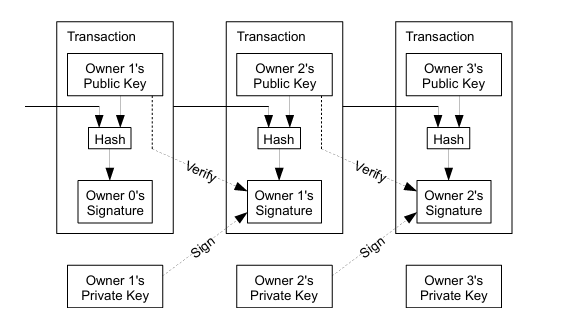
A public key or address can be shared to receive assets. A private key authorizes actions and must remain secret. A seed phrase can usually restore a group of private keys, so exposing it often allows an attacker to transfer all assets controlled by those accounts.
A blockchain is not the same thing as a cryptocurrency. The blockchain is the technical structure that records and verifies state; the cryptocurrency is an asset on the network. One network may support its native coin, stablecoins, application tokens, NFTs, and other digital credentials at the same time.
Cryptocurrency is not necessarily fully anonymous. Most public blockchains use pseudonymous addresses and publish transaction histories. Once an address is linked to an exchange account, device, IP address, or real-world payment, analysts may be able to identify its user.
To learn more about blocks, consensus, wallets, keys, and on-chain transactions, read What Is Cryptocurrency? A Simple Guide to Digital Currency.
How Does a Cryptocurrency Transaction Work?
First, the sender enters the destination address, asset, amount, and network fee in a wallet. Networks can use different address formats, native gas assets, and confirmation rules.
Second, the wallet uses the private key to sign the transaction. The signature proves that the controller approved the action without revealing the private key to the network.
Third, the transaction is broadcast to the network. Nodes check the signature, balance, nonce or UTXOs, fee, and protocol rules. Validators or miners then include valid transactions in a block.
Fourth, the block receives network confirmations. Wallets and block explorers read the updated state and display the balance, transaction hash, and confirmation count.
“Submitted” does not mean “confirmed,” and a successful on-chain transaction does not necessarily mean a destination platform has credited the deposit. A centralized platform may require additional block confirmations, a memo, or an internal risk review.
How Are Cryptocurrency and Blockchain Related?
A blockchain is a ledger that organizes data in sequence and is collectively verified by a network. Different chains use different consensus mechanisms, data structures, and execution environments; they do not all use the same technology.
A native cryptocurrency often pays for network security and resources. Some networks require their native coin for transaction fees, while validators may participate in consensus through staking or proof of work.
Smart contracts allow a blockchain to execute code for lending, swaps, games, identity, and governance. Application tokens may represent access, voting power, rewards, or an accounting unit within a protocol.
Blockchains can be publicly verifiable and difficult for one party to alter, but that does not make every on-chain claim true. A smart contract can only act on its inputs; faulty oracles, malicious issuers, and fake assets can still be permanently recorded.
How Does Cryptocurrency Differ from Traditional Money?
Fiat money is generally issued and managed by a national or regional monetary authority and functions as payment, a unit of account, and a means of settling obligations under the relevant legal system. Banks, payment providers, and central banks form its account, clearing, and monetary-policy infrastructure.
Most cryptocurrencies are not issued by central banks. Their supply and transfer rules are determined by protocols, validators, governance systems, or token contracts. They are also generally not legal tender, so merchants usually have no broad obligation to accept them.
Fiat accounts are commonly held by banks or payment institutions, and access may be restored through identity verification. A self-custody wallet is controlled by the user’s private keys. If its seed phrase is lost permanently and no recovery method exists, no central institution can normally reset it.
Traditional payments may be reversed, charged back, or manually frozen. Confirmed public-blockchain transactions are usually difficult to reverse. That finality can improve settlement certainty, but it also makes recovery harder after entering the wrong address, choosing the wrong network, or falling for a scam.
Crypto assets can move across borders around the clock, but speed and cost depend on network congestion, block confirmation, bridges, and platform review. Transfers are not inherently free or instant, and stablecoins still carry issuer, reserve, redemption, and depegging risks.
For a fuller comparison of issuance, payments, privacy, volatility, and regulation, read How Is Cryptocurrency Different from Traditional Money?.
Is a Stablecoin the Same as a Digital Dollar?
A stablecoin usually tries to track the price of a fiat currency or another asset, but a peg does not make it identical to cash. Fiat-backed stablecoins depend on an issuer, bank accounts, reserve quality, redemption rules, and compliance arrangements.
Crypto-collateralized stablecoins rely on on-chain collateral, liquidation mechanisms, and oracles. Algorithmic designs may depend on incentives and supply adjustments. Their depegging, liquidity, and governance risks can be very different.
Stablecoins can make on-chain pricing and settlement more convenient, but they do not automatically carry deposit insurance, unconditional redemption rights, or government credit. Users should review the issuer, reserve reports, contract address, supported networks, and platform rules.
A central bank digital currency is issued by a central bank and normally remains part of the national monetary system. It is not the same as a private cryptocurrency or stablecoin on an open network.
How Did Cryptocurrency Develop?
Modern cryptocurrency did not appear from nowhere. Earlier work on digital cash, cryptography, timestamps, peer-to-peer networks, and proof of work laid the foundations for transferring electronic value without one central ledger operator.
Satoshi Nakamoto published the Bitcoin white paper in 2008, and the Bitcoin network launched in 2009. Its central breakthrough was enabling an open network to agree on transaction ordering and prevent double spending without a conventional central bookkeeper.
Other assets and networks followed. Ethereum launched in 2015 and brought general-purpose smart contracts to mainstream public blockchains, allowing developers to build tokens, decentralized applications, and automatically executed protocols.
Stablecoins improved on-chain accounting, DeFi expanded swaps and lending, NFTs advanced expressions of digital ownership, and rollups and other scaling technologies sought to increase throughput and reduce costs. At the same time, exchange failures, contract exploits, scams, and market cycles continued to expose risk.
History is not a price chart that only moves upward. Every stage includes technical experiments, speculative bubbles, regulatory adjustments, and failures. See The History of Cryptocurrency: From Satoshi to a Trillion-Dollar Market for a fuller timeline.
Why Does Cryptocurrency Have Value?
An asset’s price reflects what market participants are willing to pay, but price is not the same as long-term value. Crypto assets should be evaluated through supply, utility, security, demand, liquidity, and the rights granted to holders.
Scarcity is one factor. Bitcoin has a defined issuance schedule, and some tokens impose caps or burning mechanisms. Yet scarcity alone does not create demand, and low supply does not by itself prove value.
Network effects are another factor. A network may become more useful as its user base, developers, validators, infrastructure, and liquidity grow. However, bots, incentives, or wash activity can inflate active-address and transaction figures.
Utility can include paying network fees, providing collateral, participating in governance, accessing an application, or serving as a settlement asset. Value capture may be weak if other assets can replace the token or if product growth does not require holding it.
Security and credibility also matter. Code, consensus, decentralization, governance privileges, custody, and operating history all affect the risk premium. Advanced technology does not guarantee that a token will appreciate.
Liquidity determines whether users can enter or exit near the displayed price. A high quoted price in a small pool may not support a real sale, and market capitalization does not mean an equal amount of cash is available.
For more on scarcity, consensus, cost, network effects, and market pricing, read Why Does Cryptocurrency Have Value? Scarcity and Consensus.
Why Are Cryptocurrency Prices So Volatile?
Crypto markets trade around the clock with participants worldwide, while liquidity and leverage differ across venues. Macroeconomic policy, regulation, technical upgrades, token unlocks, hacks, and social narratives can rapidly change expectations.
Leverage amplifies volatility. When prices reach liquidation levels, a wave of forced closures can create consecutive buying or selling and push prices away from fundamentals in the short term.
Small-cap assets often have concentrated ownership and limited market depth, so large orders move prices more easily. Unlocks or transfers by project teams, early investors, market makers, and related wallets may also affect the market.
Volatility is neither the same as opportunity nor proof of value. Beginners should consider both the possibility of a rapid gain and the possibility of losing all principal, and should avoid borrowing, going all-in, or using derivatives they do not understand.
How Many Cryptocurrencies Exist Worldwide?
There is no stable, universally accepted count. Anyone can create tokens on open networks, and data providers use different standards for active, abandoned, duplicate, spam, and test assets.
Classification matters more than counting for beginners. Native coins are created directly by blockchain networks and often pay for gas and consensus. Tokens are issued by smart contracts on an existing network.
Payment and store-of-value assets emphasize transfer and monetary properties. Smart-contract platform coins support execution and security. Stablecoins track fiat currencies or other assets. Governance tokens participate in protocol decisions, utility tokens provide access to products or services, and meme coins depend more heavily on community and attention.
Other categories include liquid-staking tokens, lending receipts, real-world-asset tokens, privacy coins, game assets, and NFTs. Categories may overlap, and one token may serve fee, governance, and collateral functions at once.
The same name and logo do not prove two assets are identical. Always verify the network and full contract address instead of transferring based on a ticker alone. Read How Many Cryptocurrencies Are There? An Introduction to Token Categories for a detailed classification.
How Do Coins, Tokens, and NFTs Differ?
A coin generally refers to a blockchain’s native asset, such as the asset used to pay that network’s fees and support its security. Issuance and transfers are managed directly by the underlying protocol.
A token is generally issued by a smart contract and relies on its host chain for settlement. Issuers can design supply, minting, freezing, blacklists, transfer taxes, upgrades, and governance privileges, so the trust assumptions vary widely.
An NFT generally represents a unique, non-fungible token ID that may be associated with an image, game item, membership, or another right. Holding an NFT on-chain does not automatically convey copyright in an image, ownership of a physical item, or permanent storage rights; those depend on the contract and legal terms.
Wrapped and cross-chain assets require care as well. The same BTC, ETH, or stablecoin symbol may represent a native asset, a bridged version, or a custodial receipt, and each carries different risks.
Is Cryptocurrency Legal?
There is no single global answer. Countries and regions regulate holding, trading, payments, issuance, mining, advertising, derivatives, custody, taxation, and anti-money-laundering obligations separately.
Permission to hold an asset does not mean every product is permitted. A jurisdiction may allow personal spot holdings while restricting unregistered platforms, leveraged products, stablecoin issuance, or public promotion.
Access to a platform does not prove that a user is eligible. Before registering, check location, age, identity-verification, sanctions, source-of-funds, and service requirements. Do not use a VPN, false identity, or another person’s details to bypass restrictions.
Tax treatment can also differ for purchases, sales, exchanges, payments, staking, mining, and airdrops. On-chain transactions are public and persist over time, so users should retain dates, assets, quantities, fees, transaction hashes, and reference fiat values.
The FATF and other international organizations promote anti-money-laundering, customer-identification, and transfer-information rules for virtual-asset service providers, but implementation differs by jurisdiction. Regulation changes quickly, and an old article cannot replace current guidance from local regulators, tax authorities, or qualified professionals.
For a decision framework and the main regulatory dimensions, read Is Cryptocurrency Legal? A Global Regulatory Overview.
Which Terms Must a Beginner Understand?
A blockchain is a ledger maintained by a network. A block organizes a set of transactions or state data. Nodes propagate, verify, or store network information. A consensus mechanism allows participants to agree on valid state.
A wallet manages accounts and signing. An address receives and identifies assets. A private key authorizes transactions, and a seed phrase usually restores a group of accounts. Addresses can be shared; private keys and seed phrases must never be given to anyone.
A transaction hash uniquely identifies an on-chain transaction. Confirmation count shows how many blocks followed the transaction’s block. Gas is the resource fee for executing operations on some networks. Nonces or UTXOs help determine transaction ordering and balances.
Market capitalization usually equals price multiplied by circulating supply. Fully diluted valuation, or FDV, often uses price multiplied by maximum or fully diluted supply. Both are valuation indicators, not proof that an equal amount of exit liquidity exists.
Spot trading directly buys or sells an asset. Futures and other derivatives trade price exposure. Leverage magnifies gains and losses and can trigger liquidation. Beginners should not use leverage before understanding margin and forced-liquidation rules.
For ten core concepts and common misconceptions, read 10 Essential Cryptocurrency Terms for Beginners.
What Do Wallets, Exchanges, and Block Explorers Do?
A centralized exchange helps users register accounts, complete identity verification, trade, and hold assets. Users sign in to a platform account, and changes to internal balances before an on-chain withdrawal may not create public transactions.
A self-custody wallet lets users control keys and connect directly to blockchain applications. That gives more direct control, but it also leaves backup, signing, network, and address mistakes primarily with the user.
A block explorer searches public addresses, transactions, blocks, tokens, and contracts. It helps verify results, but it does not store private keys and cannot reverse an already confirmed mistaken transaction.
A DApp uses a front end to interact with smart contracts. Connecting a wallet generally reveals an address and requests permissions, but signatures, approvals, and transactions can have different consequences, so every wallet prompt must be read carefully.
These tools are not interchangeable. A platform showing that a deposit arrived does not prove a wallet’s on-chain balance, an icon in a self-custody wallet does not prove a token contract is authentic, and a successful explorer status does not remove market risk from a purchase.
What Are the Potential Benefits of Cryptocurrency?
Open networks can let users create accounts and transfer assets when they satisfy protocol rules, lowering access barriers in some places and use cases.
Public ledgers allow transactions and contract states to be verified. Anyone can inspect balances and transfers, but public visibility does not guarantee anonymity or a correct front-end interpretation.
Smart contracts support programmable assets and automatically executed business logic, enabling applications in payments, lending, trading, games, digital identity, and governance.
Crypto networks commonly operate around the clock and can transfer value across platforms and regions. Cross-border use still remains subject to local laws, platform rules, sanctions, taxes, and network fees.
Self-custody allows users to avoid depending on a single institution to hold keys, which can be useful when direct control matters. In return, the user assumes responsibility for backups, verification, and correct operation.
What Are the Main Risks of Cryptocurrency?
The first is price risk. Crypto assets can move sharply in a short time, and small-cap assets may have too little liquidity to sell at the displayed price.
The second is key and phishing risk. Exposed seed phrases, malicious signatures, fake support, counterfeit apps, clipboard replacement, and SIM swaps can all lead to lost assets.
The third is platform and custody risk. An exchange may be hacked, suspend withdrawals, become insolvent, or face regulatory restrictions. Users may not receive the protections that apply to bank deposits.
The fourth is smart-contract and protocol risk. Code flaws, administrator upgrades, oracle failures, bridge attacks, stablecoin depegging, and governance failures can cause losses.
The fifth is fraud and manipulation. Fake projects, Ponzi schemes, rug pulls, fraudulent airdrops, pump-and-dumps, and impersonation remain common. Guaranteed returns, inside groups, and urgent transfer requests are major warning signs.
The sixth is legal and tax risk. A product may be restricted in a jurisdiction, and rules can change. Inadequate records make reporting and proof of funds more difficult.
For a balanced review of benefits and risks, read The Pros and Cons of Cryptocurrency: Opportunity and Risk.
How Should a Beginner Start Learning?
First, define your objective. Distinguish between learning the technology, testing a transfer, holding for the long term, and short-term trading. Do not let social-media excitement suddenly change your risk tolerance.
Second, learn the basic vocabulary. Make sure you can explain wallets, private keys, networks, gas, market capitalization, liquidity, and leverage before using real money.
Third, verify legal and platform eligibility. Confirm which products are permitted where you live, along with identity requirements, tax records, and source-of-funds rules.
Fourth, establish a secure environment. Use a separate email address, a strong password, a password manager, two-factor authentication, and official bookmarks. Avoid managing assets in an environment full of unknown browser extensions or software.
Fifth, begin with small spot trades and basic transfers. Learn deposits, trading, withdrawals, on-chain verification, and recordkeeping before moving to derivatives, DeFi, bridges, or airdrops.
Sixth, review every action. Record why you bought, the maximum risk, exit conditions, fees, and actual result instead of saving only winning screenshots.
How Should You Choose Your First Asset to Study?
An asset chosen for study is not an investment recommendation. It may be easier to learn from assets with longer histories, extensive public documentation, and relatively mature networks and ecosystems. They can demonstrate supply, consensus, wallets, transactions, and explorers.
Do not judge whether an asset is cheap or expensive by unit price. A token can have a low price simply because its supply is very large. Consider circulating supply, market capitalization, FDV, unlocks, liquidity, and holder concentration together.
Do not rely only on a white paper’s vision. Check whether the product operates, whether code and contracts are public, team and governance privileges, token utility, revenue or demand, audit scope, and past security incidents.
Beginners should not ignore risk merely because a stablecoin’s price looks stable. Stablecoins require checks of their issuer, reserves, redemption, network, contract, and platform support.
How Do You Complete Your First Small Transaction?
Start from an official channel to register with a platform that is eligible in your jurisdiction. Enable a unique password, 2FA, and anti-phishing settings. Do not download an app through a stranger’s referral link.
Use a small amount you can afford to lose completely. Confirm the deposit method, fees, processing time, and account-name requirements. Do not borrow or use money needed for living expenses.
Before placing an order, verify the full asset name, trading pair, order type, quantity, execution price, and fee. A market order prioritizes immediate execution, while a limit order executes only when its specified conditions are met. Both can be affected by market depth.
Before withdrawing to a wallet, verify the asset, network, address, memo, platform support, and minimum amount. Test a new address or network with a small transfer before moving more funds.
Save order records, deposit and withdrawal records, and on-chain transaction hashes. If something goes wrong, contact support only through an official public channel, and never provide a seed phrase, private key, or verification code.
How Should Beginners Store Crypto Assets?
Platform custody can suit users who trade frequently or value account recovery, but it depends on the platform’s security, liquidity, and compliance. Enable every relevant security feature and avoid keeping more on the platform than the intended use requires.
Self-custody suits users willing to take responsibility for keys. Back up seed phrases offline; never screenshot them, email them, upload them to cloud storage, or enter them into a supposed verification website.
A hardware wallet isolates keys from an internet-connected device, but it cannot stop the owner from approving a malicious transaction. High-value actions still require checking the device screen, address, network, and contract data.
Funds can be separated by purpose: trading funds, an everyday wallet, a Web3 interaction wallet, and long-term reserves. Separation does not eliminate risk, but it limits the impact if one account is compromised.
Whichever method you choose, answer these questions in advance: Who controls the keys? How are they backed up? How will access be restored if a platform or device fails? How can family members or a team legally inherit or assume control?
How Can You Identify Common Cryptocurrency Scams?
Guaranteed returns, principal protection, sure profits, exclusive allocations, and deposit countdowns are usually warning signs. Legitimate investments cannot remove price and credit risk.
Fake support agents often send unsolicited direct messages and ask users to share screens, install remote-control software, provide verification codes, or enter seed phrases. Real technical support does not need a user’s highest level of control.
Phishing sites use similar domains, search advertisements, and counterfeit apps. Check a domain character by character and enter platforms and wallets through official homepages or saved bookmarks.
Fake tokens can copy names and logos, while spam airdrops may appear in a wallet automatically. Verify the network and full contract address before trading or transferring.
Ponzi schemes use new funds to pay early participants and use referral rewards to manufacture growth. Stop immediately if returns cannot be explained or withdrawals require recruiting more people or paying an “unlock” fee.
How Can You Follow Reliable Cryptocurrency Information?
The first layer is primary sources: project websites, technical documentation, code repositories, governance forums, status pages, on-chain contracts, and regulator announcements.
The second layer is professional media and data services, which help discover events and provide context. Articles should distinguish their publication date from the date an event occurred and link to the original material.
The third layer is social media and communities. They are useful for finding leads but especially prone to out-of-context claims, fake screenshots, and impersonation. Share counts do not establish truth.
For significant news, verify at least the project’s statement, on-chain data, and an independent authoritative source. A price move before an announcement does not prove a rumor; it can also come from liquidity, leverage, or manipulation.
A focused watchlist is more effective than chasing every topic. Track upgrades, unlocks, governance, security alerts, regulatory changes, and platform support for assets you hold.
For a hierarchy of sources and a daily verification workflow, read How to Follow Cryptocurrency News: A Guide to Reliable Sources.
Which On-Chain and Market Metrics Should Beginners Watch?
Price and volume show market outcomes, but figures can differ across platforms. High volume may include bots or incentivized trading, so it should be considered together with depth and spread.
Market capitalization helps compare circulating value, while FDV values the full supply at the current price. When many tokens remain locked, future supply may pressure prices.
Holder concentration shows whether a small number of addresses control much of the supply. Exchange, bridge, and contract addresses may represent many users, however, so the metric cannot be interpreted mechanically.
Active addresses, transaction counts, fees, and protocol revenue can indicate use, but airdrops, bots, and batch transactions may distort them. Combine metrics and understand their definitions.
Proof of reserves, audits, and verified code answer only part of the question. A reserve snapshot may omit liabilities, and an audit cannot guarantee that no future vulnerability will appear.
The Most Common Beginner Misconceptions
Misconception one: a low unit price means an asset is cheaper. Price must be assessed together with total supply, circulating supply, valuation, and unlocks.
Misconception two: decentralization means there are no administrators. Many projects have administrator keys, upgrade proxies, multisignature controls, and governance privileges that must be examined separately.
Misconception three: public on-chain activity prevents fraud. Scams can also deploy public contracts. Visible code does not mean ordinary users understand it, nor does it prove an issuer is honest.
Misconception four: a stablecoin will always equal one unit of fiat currency. Depegging, freezing, redemption, and issuer risks remain.
Misconception five: past gains predict the future. Market structure, supply, competition, and regulation change, while survivorship bias ignores the many projects that went to zero.
Misconception six: self-custody is absolutely safe. It removes some third-party custody risk but transfers responsibility for keys, backups, signatures, and operations to the user.
The Hotcoin CRYPTO-9 Beginner Learning Method
This nine-step method organizes the learning process. It is not a recommendation of any asset, platform, or investment strategy.
24.1 C: Concept — Explain What the Asset Is
Determine whether it is a native coin, token, stablecoin, NFT, or another credential, and understand its network and contract.
24.2 R: Rules — Understand Ledger and Transaction Rules
Learn consensus, addresses, private keys, gas, confirmations, and irreversibility. Do not mistake a wallet interface for the blockchain itself.
24.3 Y: Yesterday — Review Its History
Analyze how the project and sector emerged and which cycles and incidents they experienced. Do not rely only on recent promotional material.
24.4 P: Price and Purpose — Separate Price from Utility
Assess supply, demand, network effects, liquidity, and real utility separately. Do not use a rising price as proof of value.
24.5 T: Type — Identify the Asset Category
Distinguish coins, tokens, stablecoins, governance tokens, and wrapped assets. Verify the network, complete contract address, and issuance privileges.
24.6 O: Obligations — Confirm Legal and Tax Duties
Check jurisdiction, platform eligibility, KYC, product restrictions, records, and reporting duties. Do not bypass regional rules.
24.7 7: Terms — Master the Core Vocabulary
Be able to explain wallets, keys, gas, market capitalization, FDV, liquidity, leverage, and liquidation in your own words.
24.8 8: Trade-offs — Consider Benefits and Risks Together
Evaluate openness, transparency, and programmability together with volatility, fraud, technology, custody, and regulatory risks.
24.9 9: Track — Keep Following Primary Information
Prioritize official documentation, governance, status pages, on-chain data, and regulatory announcements. Cross-check media and social posts.
Safety Rules for Cryptocurrency Beginners
Never give anyone a seed phrase, private key, verification code, or complete backup. Support agents, project teams, airdrops, and asset “recovery” never require this information.
Do not use money needed for living expenses, borrow to buy crypto, or use leverage, derivatives, or complex DeFi products before understanding them.
Do not transfer based on a name and logo. Verify the asset, network, address, memo, contract, and platform support every time, and begin with a small test.
Do not skip verification because of high returns, a friend’s recommendation, a celebrity video, or a group-chat screenshot. Deepfakes, compromised accounts, and fake media can all create convincing deceptions.
Do not treat any single platform, wallet, or protocol as risk-free storage. Separate operational risk by purpose, and maintain accurate records and recovery plans.
Frequently Asked Questions
26.1 Are Cryptocurrency and Blockchain the Same Thing?
No. A blockchain is a technical structure for recording and verifying state, while cryptocurrency is an asset on the network. One blockchain can support many tokens and applications.
26.2 Is Cryptocurrency Completely Anonymous?
Most public blockchains use public addresses and are pseudonymous. Transaction histories can be traced, and users may be identified once an address is linked to a platform account, device, or real-world identity.
26.3 Is a Stablecoin the Same as Dollars in a Bank Account?
No. A stablecoin depends on its issuance, reserves, collateral, redemption, and contract mechanisms. It may depeg, be frozen, or become subject to platform and regulatory restrictions.
26.4 Is a Low-Priced Coin More Likely to Rise?
Not necessarily. Unit price depends on total supply and should be considered with market capitalization, FDV, unlocks, liquidity, utility, and holder concentration.
26.5 Is It Safer to Keep Assets on an Exchange or in a Wallet?
They carry different risks. Platform custody depends on institutional security and solvency; self-custody depends on the user securing keys and approving transactions correctly. Choose according to your ability and intended use.
26.6 Is Cryptocurrency Legal Everywhere?
No. Rules for holding, trading, payments, issuance, derivatives, and taxes differ by jurisdiction and can change. Consult official local requirements.
26.7 Should Beginners Buy First or Learn First?
Learn about the asset, risks, legal rules, platforms, and security before deciding whether to participate with a small amount you can afford to lose.
Conclusion: Build a Decision Framework Before Entering the Market
Cryptocurrency combines digital ownership, public ledgers, and programmable transactions, creating new technical paths for payments, settlement, and internet applications. It also places private-key management, transaction verification, and part of the risk directly on users.
Beginners do not need to master every protocol at once, but they should build foundations in order: define the asset and network; understand how they differ from fiat money; use history and utility to assess value; classify assets to identify risk; verify legal and tax duties; learn the vocabulary; weigh advantages against disadvantages; and establish reliable information sources.
Prices keep changing, but a sound decision process remains useful. If you cannot explain an asset’s utility, control privileges, exit liquidity, and maximum loss, a rising market is not a reason to rush.
Begin with small amounts, spot transactions, and verifiable actions. Keep records, review your decisions regularly, and make “do not sign what you do not understand, and do not transfer when uncertain” a permanent safety habit.
To connect an independent wallet to Web3 applications, consider Hotcoin Web3 Wallet. For mobile prices and trading tools, visit the Hotcoin App. Browse more educational material at Hotcoin.
Risk warning: This article is for educational and informational purposes only and does not constitute investment, trading, legal, tax, or cybersecurity advice. Cryptocurrency can involve sharp price volatility, insufficient liquidity, key exposure, phishing, platform insolvency or withdrawal suspension, smart-contract vulnerabilities, stablecoin depegging, bridge exploits, market manipulation, fraud, and regulatory change. Before participating, verify current local rules, platform eligibility, asset networks, contracts, fees, and custody methods, and use only funds you can afford to lose completely.
Recommended
View more